


How BMW ConnectedDrive Supports Daily Ownership
Modern vehicles rely on more than mechanical engineering to support everyday driving. BMW ConnectedDrive was developed as a digital ecosystem designed to connect the vehicle, the driver’s smartphone, and BMW’s cloud-based services. Many BMW shoppers researching connected technology want to understand what BMW ConnectedDrive actually does and whether it improves real ownership routines.

BMW ConnectedDrive is the platform that supports remote vehicle access, connected navigation features, smartphone integration, and digital upgrades that can evolve over time. Rather than functioning as a single feature, BMW ConnectedDrive acts as a network of services that help drivers interact with their vehicle before, during, and after each trip.
Understanding how BMW ConnectedDrive works helps drivers see how digital vehicle technology can simplify daily ownership tasks such as locating the vehicle, checking vehicle status, sharing vehicle access, and receiving software improvements over time.
How BMW ConnectedDrive Fits Into Daily Ownership
Many drivers ask what BMW ConnectedDrive actually is and how it differs from other in-vehicle technology systems. BMW ConnectedDrive is the digital platform that enables communication between the vehicle, BMW’s connected services, and supported driver devices such as smartphones.
The system integrates several ownership tools that extend vehicle access beyond the cabin. Instead of requiring the driver to be inside the vehicle to access certain functions, BMW ConnectedDrive allows many of these actions to be performed remotely through connected devices.
BMW ConnectedDrive services can support tasks such as:
Read the rest of this entry »BMW vehicles are engineered with advanced braking systems designed to deliver consistent stopping power and predictable pedal feel across a wide range of driving conditions. For many owners, one of the most common maintenance questions is when brake service will actually be required. Unlike older maintenance schedules that relied on fixed mileage intervals, BMW vehicles use a monitoring system that evaluates braking components and predicts service timing based on real driving conditions.
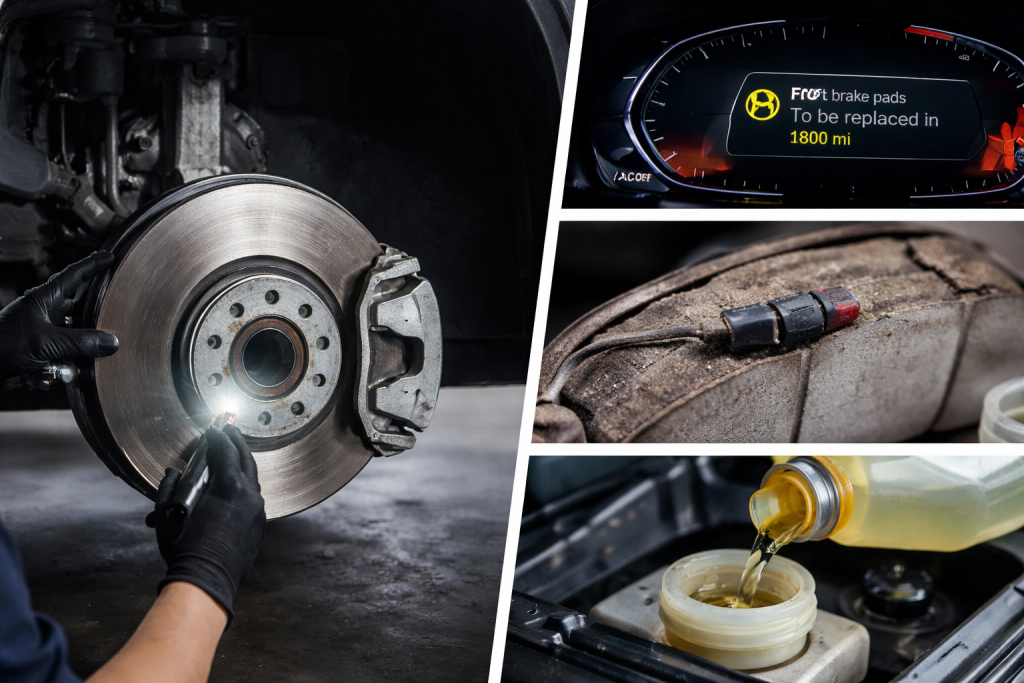
This approach allows BMW brake service intervals to adapt to how the vehicle is used rather than following a universal replacement schedule. Understanding how BMW determines brake service timing, how brake wear sensors work, and why different brake components are monitored separately can help owners interpret service reminders and plan maintenance more effectively.
How BMW Determines Brake Service Timing
Many BMW owners ask whether brake pads follow a fixed replacement schedule. BMW vehicles instead rely on a maintenance monitoring system called BMW Condition Based Service. BMW Condition Based Service is a vehicle maintenance system that uses sensors, elapsed time, mileage, and driving conditions to forecast when service items such as brake pads or brake fluid will need attention.
The system continuously analyzes vehicle operation to estimate remaining service life for several components. Rather than assigning one universal interval for brake service, the system evaluates how frequently and how aggressively the brakes are used.
Several factors can influence BMW brake service timing:
Read the rest of this entry »How BMW Adaptive Suspension Adjusts to Real Roads
Many drivers researching modern BMW vehicles want to understand how ride comfort and handling can change depending on road conditions. Performance oriented vehicles traditionally require a trade off between comfort and sharp handling. A softer suspension improves ride comfort but allows more body movement, while a firmer suspension improves control but can transmit more road harshness.

BMW adaptive suspension technology was developed to address this balance. Instead of relying on fixed suspension settings, BMW adaptive suspension continuously adjusts how the suspension reacts to the road. The system allows a BMW vehicle to absorb uneven pavement comfortably during daily driving while tightening body control when drivers accelerate, brake, or take corners more aggressively. For drivers evaluating BMW models, adaptive suspension represents a key technology that helps combine everyday comfort with responsive driving dynamics.
How BMW Adaptive Suspension Works
Many shoppers researching BMW vehicles ask what adaptive suspension actually is. BMW adaptive suspension is a suspension system that electronically adjusts the firmness of the vehicle’s dampers in real time in response to road conditions and driving behavior.
A vehicle’s dampers, often called shock absorbers, control how quickly the suspension compresses and rebounds when the wheels encounter bumps or changes in pavement. Traditional suspension systems use dampers with a fixed resistance level. That means the suspension always reacts the same way regardless of road conditions.
BMW adaptive suspension replaces fixed dampers with electronically controlled dampers that can change their resistance instantly. Sensors around the vehicle monitor driving inputs and road movement, allowing the system to adjust damper stiffness many times per second.
This allows BMW adaptive suspension to provide two key benefits at the same time:
Read the rest of this entry »For many drivers researching new vehicles, leasing offers a different approach to vehicle ownership compared with traditional financing. Shoppers exploring 2026 BMW models often want to understand how leasing works, why monthly lease payments can be lower than loan payments, and what happens when the lease term ends. BMW leasing structures are designed around depreciation, predicted resale value, and driving usage, which means understanding how these factors interact can help drivers evaluate whether leasing aligns with their driving habits and financial goals.

This guide explains how BMW lease agreements work, how lease payments are calculated, how mileage limits affect the structure of a lease, and what options are available at the end of a BMW lease term.
How BMW Lease Agreements Work
Many shoppers ask how a BMW lease actually works and why lease payments differ from financing payments. A BMW lease allows a driver to use the vehicle for a fixed period of time while paying primarily for the vehicle’s depreciation during that period rather than the entire purchase price.
BMW Financial Services structures most leases around three core elements:
Read the rest of this entry »Modern BMW safety systems are designed to support drivers across very different environments. City streets and highways place fundamentally different demands on a vehicle’s safety architecture, and BMW engineers its driver assistance technologies to adapt based on speed, traffic density, and surrounding conditions. Understanding how these systems behave in real world use helps drivers trust the assistance without overestimating its role.

BMW safety technology is built around support, not replacement. The systems assist with awareness, braking, and steering input, but the driver remains responsible at all times.
How BMW Safety System Architecture Works
BMW safety systems rely on a combination of cameras, radar sensors, and control modules working together in real time. This layered approach allows the vehicle to interpret distance, speed, lane markings, and surrounding traffic simultaneously.
Key architectural elements include:
- Forward facing cameras that monitor lane markings, vehicles, and pedestrians
- Radar sensors that track distance and closing speed in traffic
- Side sensors that monitor adjacent lanes
- Central processing that blends inputs to determine alerts or intervention
This sensor fusion allows BMW systems to respond differently at low speed urban driving versus sustained highway travel.
Read the rest of this entry »Certified Pre-Owned BMW Inspections Explained
For shoppers considering a used BMW, certification is less about marketing language and more about risk control. A BMW Certified Pre-Owned vehicle must meet manufacturer defined standards before it can earn that designation. Understanding how the inspection works, what disqualifies a vehicle, and how reconditioning decisions are made helps buyers evaluate whether CPO status meaningfully reduces ownership uncertainty.

BMW’s Certified Pre-Owned program is governed by the manufacturer, not created at the dealer level. That distinction matters because it sets uniform requirements for eligibility, inspection, and warranty coverage across the network.
What Qualifies a BMW for Certification
Not every used BMW can become certified. Eligibility is established before inspection begins.
Vehicles must meet manufacturer limits related to age and mileage. Models outside those thresholds are excluded regardless of condition. In addition, vehicle history plays a role. Units with certain accident histories, title issues, or incomplete records are typically disqualified before inspection is even attempted.
Certification is not a cosmetic upgrade applied to any used vehicle on the lot. It is a controlled process that begins with eligibility screening.
Read the rest of this entry »BMW plug in hybrid vehicles are designed to adapt to how people actually drive, not to force drivers into a rigid routine. For shoppers considering a BMW PHEV, the most important question is not maximum electric range on paper, but how the system behaves across normal daily driving. Understanding what the vehicle does in real conditions helps set accurate expectations and avoid disappointment.
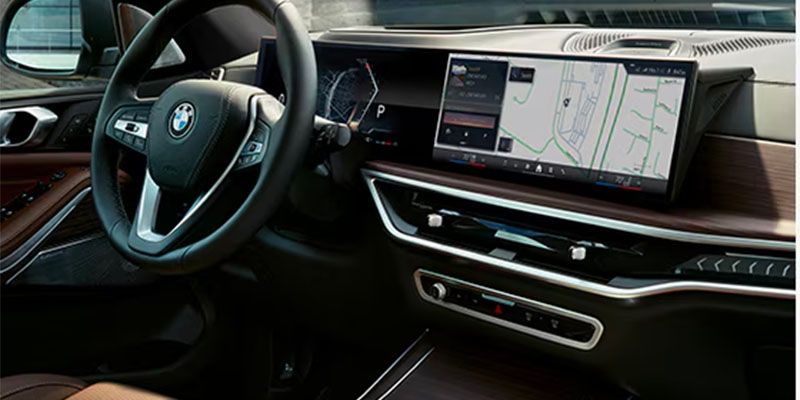
BMW’s plug in hybrid architecture blends an electric motor, a high voltage battery, and a traditional combustion engine into a single coordinated system. The vehicle is always managing energy flow in the background, adjusting based on speed, load, drive mode, and battery state.
This makes daily driving behavior predictable once the system logic is understood.
How BMW Plug In Hybrid Systems Actually Work
A BMW plug in hybrid is not an electric vehicle with a gas backup. It is a dual power system designed to optimize efficiency across varied conditions.
Core components work together as follows:
- The electric motor provides propulsion at low speeds and during light load driving
- The battery stores energy from external charging and regenerative braking
- The combustion engine engages when power demand exceeds electric efficiency or battery charge is low
- The transmission blends torque from both power sources seamlessly
The driver does not manually switch between systems in most situations. The vehicle decides which power source makes the most sense based on efficiency and performance needs.
Read the rest of this entry »Leasing works best when the vehicle’s real world use matches how the contract is structured. For Jacksonville drivers comparing the BMW X5 and BMW 5 Series, the decision is less about SUV versus sedan preference and more about how each vehicle behaves under a lease when mileage, depreciation, and daily driving patterns are factored in.

Both models lease well for different reasons, but they support different usage profiles. Understanding how BMW Financial Services structures leases and how each vehicle type absorbs wear, mileage, and depreciation helps drivers avoid common lease regret points.
How BMW Leasing Is Structured at a System Level
BMW leases are closed end contracts. That means the vehicle’s future value is predicted up front and built into the payment. Three variables matter most:
- Residual value
The estimated value of the vehicle at lease end. Higher residuals generally support lower monthly payments. - Mileage allowance
Typically 10,000, 12,000, or 15,000 miles per year, with options to pre purchase additional mileage. - Term length
Most BMW leases run 36 months, which aligns with warranty coverage and predictable depreciation.
Where drivers get into trouble is assuming all BMWs behave the same under these variables. They do not.
Read the rest of this entry »BMW ownership is often associated with performance, refinement, and advanced technology. What many Jacksonville buyers want clarity on is how BMW maintenance coverage works and how it affects long term ownership costs. BMW approaches maintenance differently than many brands by relying on condition based service rather than fixed mileage schedules. Understanding this system helps owners plan service intelligently instead of guessing or over servicing their vehicle.

This overview explains what BMW maintenance coverage includes, how condition based service logic works, and what buyers should plan for over time.
BMW Maintenance Coverage Versus Warranty Coverage
One of the most common points of confusion is the difference between maintenance and warranty.
Maintenance coverage applies to:
- Scheduled service items
- Wear related maintenance tasks
- Oil service and inspections
- Certain brake services depending on coverage terms
Warranty coverage applies to:
- Defects in materials or workmanship
- Component failures outside normal wear
- Mechanical and electrical repairs
Maintenance coverage is designed to handle predictable service needs. Warranty coverage addresses unexpected failures. They work together but serve different purposes.
Read the rest of this entry »Daily commuting places unique demands on both drivers and vehicles. Stop and go traffic, highway cruising, lane changes, and tight parking situations all require constant attention. BMW driver assistance systems are designed to support drivers in these scenarios by reducing workload and increasing situational awareness. These systems do not replace the driver. Instead, they operate as layered support tools that rely on cameras, radar, and sensor data to assist with routine driving tasks.

Understanding how these systems work and where their limits exist helps commuters use them effectively and confidently.
The Foundation of BMW Driver Assistance Technology
BMW driver assistance systems are built on sensor fusion. This means multiple sensors work together to interpret the driving environment in real time.
Core sensor types include:
- Forward facing cameras that identify lane markings, traffic signs, and vehicles
- Radar sensors that measure distance and closing speed
- Ultrasonic sensors used for close range detection during parking
- Vehicle motion sensors that track steering input, yaw, and speed
By combining these inputs, the vehicle builds a continuously updated picture of its surroundings.
Read the rest of this entry »Connect with us


